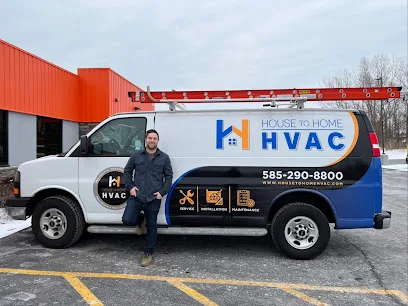
When heating or cooling stops behaving the way it used to, the hard part isn’t finding an HVAC contractor—it’s deciding whether you’re looking at a repair job, a deeper service, or the start of a replacement conversation. For homeowners calling House to Home Heating & Cooling, the starting point is the same: match what’s happening in your home to the type of HVAC work that actually fixes the root cause.
House to Home Heating & Cooling lists a service line at +1 585-290-8800 and shares details about heating, cooling, heat pumps, and indoor air quality on its website. The company also presents itself as a “24/7 comfort” option, and the listing context shows a 4.9 from 259 reviewers rating. Those signals can help you feel more confident about making the first call—then the real work is clarifying what your system needs.
Start with the symptom pattern: what is the system doing right now?
Different failures point to different jobs. If your furnace tries to start but won’t ignite, that often leads to diagnosis around ignition, airflow, and safeties. If your AC runs but doesn’t cool, the likely scope can include airflow problems, refrigerant issues, or duct leakage—each of which changes what a repair estimate should include.
For heat pumps and mini-split systems, pay attention to whether the unit struggles in one mode or intermittently changes behavior. A contractor can still help with repair, but the decision tree is different than with a conventional furnace and AC.
Why the “first 10 minutes” matter
Before anyone replaces parts, you want the technician to observe the system operating sequence: what happens first, what stops it, and whether airflow matches what the thermostat calls for. This is how HVAC pros avoid “random parts” repairs and get to the real cause faster.
Repair is usually the smarter step when damage looks localized
Repair often makes sense when the issue appears confined to one component and the rest of the system is still performing. Common examples include a failed thermostat, a blower problem, a refrigerant leak that can be corrected, or a maintenance-related breakdown like a component that stopped responding after long seasonal storage.
During the call, ask for the reasoning behind the fix, not just the part name. A useful response should tie the symptom to measurable findings—like combustion safety readings on gas heat, temperature differences across the system on cooling, or airflow characteristics.
What to request before you sign off on a repair
Even if you intend to repair, request documentation of what was found and what changed. You should leave the visit with clear next-step guidance: whether the system is stable, what symptoms should trigger a follow-up, and whether there’s evidence of ductwork or indoor air quality limits that repair alone won’t solve.
Replacement conversations are justified when reliability keeps dropping
Replacement enters the conversation when repairs start clustering, the system can’t maintain comfort, or key components have repeated failures. In Rochester-area seasons, the stakes are high: a system that can’t deliver consistent heating output in winter—or reliable cooling in summer—quickly turns “one smaller requests” into multiple emergency calls.
When evaluating replacement, the technician should connect the decision to your home’s comfort requirements and equipment condition, not only a calendar age number. Ask whether the system’s decline is tied to wear-and-tear across multiple components or to underlying constraints such as duct losses.
Don’t ignore ductwork and airflow limits
One of the biggest reasons HVAC repairs don’t “fully fix” comfort is mismatched airflow. If ductwork is undersized, poorly sealed, or leaky, the system can run longer than expected and still miss target temperatures. House-to-Home-related category signals emphasize ductwork and air quality in its listing context, which is a reminder: ask whether duct performance is part of the diagnosis.
Make your next estimate call-ready with 6 details
Whether you’re asking about an AC that won’t cool, a furnace that won’t start, or a heat pump that struggles, these details help a contractor price the right scope and avoid surprises:
1) When the problem started and whether it’s constant or intermittent.
2) What the thermostat displays (and any recent thermostat changes).
3) Any unusual sounds or smells during start-up.
4) Temperature differences you’ve measured (supply vs. return, if you can).
5) Your equipment age and any prior repairs in the last few years.
6) Whether allergies, humidity swings, or air-quality complaints increased alongside comfort issues.
If you can share these facts, the first conversation with House to Home Heating & Cooling is more likely to turn into a focused HVAC plan—repair when it’s truly repairable, service when it’s just maintenance drift, or replacement when reliability and efficiency are no longer aligned with your home.