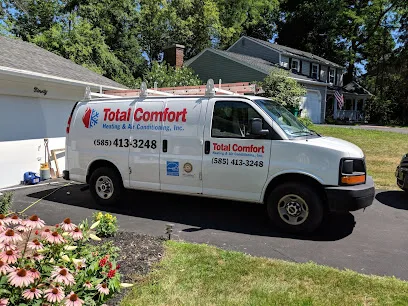
When your furnace starts acting up, the goal isn’t just to “get heat”—it’s to pick the right HVAC path: a focused repair, a deeper service, or a larger projects. Rochester winters don’t leave much room for trial and error, so it helps to understand what to look for before you book a call with Total Comfort Heating & Air Conditioning, Inc.
Locally, Total Comfort lists its address as 2892 Dewey Ave, Rochester, NY 14616 and a service line at +1 585-413-3248. Their site also points homeowners to requesting service through https://totalcomfortny.com/book-now. Public listing signals include an overall rating of 4.8 from 392 reviewers. Use those details to confirm you’re reaching the right contractor, then use the questions below to make the repair vs. replacement conversation productive.
Start with what the furnace is doing (not just that it’s “broken”)
HVAC decisions go sideways when you treat every symptom the same way. Instead, describe the pattern:
- Ignition issues: Does it fail to light, or does it light then shut down?
- Weak heat: Is airflow normal but the home never warms up?
- Short cycling: Does it run briefly, stop, and restart repeatedly?
- Strange sequence changes: Has the thermostat behavior changed, or do you hear new sounds?
These details help an HVAC technician separate control or ignition faults from problems that directly affect heat output and safety.
When repair is often the smarter first step
Repair usually makes sense when the issue appears localized and the system’s overall condition is still stable. A good HVAC diagnosis typically identifies what failed (for example, a component-level problem) and then estimates whether other parts are likely to fail soon. Ask Total Comfort—or any furnace provider—to explain:
- What was tested and what was ruled out (thermostat, airflow issues, combustion/safety checks).
- Whether the recommended fix restores normal performance or only reduces symptoms.
- How long the repaired component typically lasts in systems like yours (and what maintenance reduces repeat failures).
For many homeowners, a repair call becomes the “proof stage”: if the furnace’s behavior returns to stable, the system may be worth keeping—at least through the next heating season.
When replacement conversations are justified
Replacement tends to become more cost-effective when the problem isn’t isolated. If a technician finds that the furnace repeatedly needs major parts, struggles to deliver consistent heat, or shows signs of broader wear, it’s reasonable to price replacement alongside repair.
Here’s what to clarify during your estimate:
- Heat output and efficiency: What is the expected comfort improvement after replacement?
- System compatibility: If you’re considering upgrades like smart thermostats, confirm what works with your equipment.
- Future service risk: If repair only postpones another breakdown, discuss what those likely next issues could be.
In other words: ask not only “What’s wrong?” but “How long will this strategy hold?”
Make your call ready: 6 details that save time
You’ll get more useful HVAC guidance when you come prepared. Before you call Total Comfort at +1 585-413-3248, gather:
- Furnace model and age (from the label).
- The exact symptom timeline (when it started, whether it’s constant or intermittent).
- Any thermostat error codes or observations.
- Whether other systems are affected (airflow, humidification, indoor air quality concerns).
- Fuel type and whether you’re using any space heaters to compensate.
- Photos of the thermostat display and any visible control panel messages.
Prepared homeowners typically get clearer recommendations because the technician can match the diagnosis to the failure pattern quickly.
How to compare repair vs. replacement without guessing
One of the biggest HVAC mistakes is comparing quotes that don’t address the same scope. To make sure you’re making an apples-to-apples decision, request a written breakdown that separates:
- The diagnosis findings (what the tests showed).
- The repair scope (parts and labor) and expected performance after the work.
- The replacement scope (new equipment configuration and what it includes).
- A realistic timeline for “stability” (what conditions would suggest repair will hold vs. fail again).
If the technician can’t explain why one option fits your symptoms, you may want a second opinion—especially in older systems where “piecemeal fixes” can become expensive.
Final decision: choose the option that matches your home’s risk, not just the lowest line item
A furnace failure is stressful, but a structured HVAC conversation can turn it into a smart plan. For Rochester homeowners calling Total Comfort, use the symptoms-first approach, come ready with system details, and insist on clear scope comparisons. Whether you repair or replace, the best choice is the one that restores comfort reliably while minimizing the chance of another breakdown during the coldest weeks.