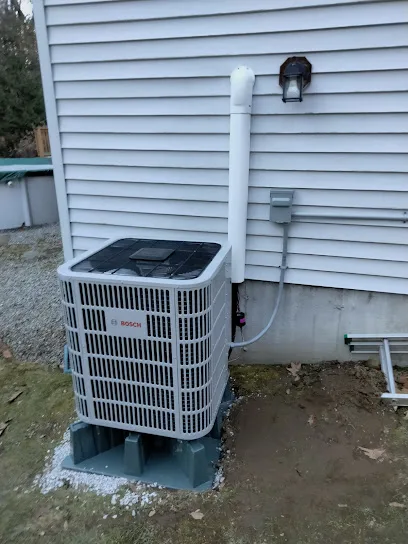
If your furnace won’t start, your AC won’t cool, or your heat pump seems to run but never reaches the thermostat setting, the toughest part of the job is often not the repair itself—it’s deciding what kind of service call you actually need. For homeowners in Worcester, MA, Done Right Mechanical Services is publicly listed at 116 Salisbury St, Worcester, MA 01604, United States and can be reached at +1 508-963-1761. The company’s own site also states it has served the Worcester County area since 2000 and highlights an approach focused on explaining details before work begins.
Here’s a practical, HVAC-focused way to think through repair vs. replace so the next visit produces a clearer plan—not just parts swapping.
Start with the outcome: restore heat or restore cooling (without mystery)
Before you request service, define “success” in measurable terms. For heating, that may mean: the system ignites safely, supply air warms, and the thermostat responds normally. For cooling, it usually means: proper airflow, stable temperatures at the vents, and no rapid cycling. When an HVAC problem is intermittent—like a heat pump that struggles in cold weather—the initial diagnosis needs to separate electrical/control issues from airflow and refrigerant-related symptoms.
Done Right Mechanical Services is publicly associated with Heat Pump Service, and the site emphasizes discussing “every detail” so homeowners know what to expect and how much a job will cost. That’s the mindset you want from any contractor: clarity on what they are checking first and why.
Use the first visit to separate diagnosis from “scope assumptions”
One common reason repair decisions go sideways is that estimates are built on incomplete information. A good service call typically starts with verification steps that can include thermostat operation checks, airflow measurements, and component-level testing. If the technician jumps straight to replacing parts without showing how the system behaves under conditions similar to your symptoms, ask for the missing evidence.
Based on your system type—furnace, central AC, or heat pump—push for answers to questions such as:
- What exactly is the system doing when it fails (ignition, compressor, blower, defrost, refrigerant cycle)?
- Are there airflow problems (dirty filters, restricted returns, duct leaks) that can masquerade as “bad equipment”?
- Does the symptom point to a control issue, a sensor issue, or a performance issue?
That’s how you avoid paying for “repair attempts” that don’t address the root cause.
How to decide repair vs. replace: look at repair scope and system condition
When you receive an HVAC estimate, treat it like a scope document, not just a price. Repair can make sense when the problem is localized (for example, a component failure that restores performance without triggering a cascade of other issues). Replacement is often the better long-term move when the diagnosis suggests multiple system failures or when the system can’t realistically meet comfort goals after the repair.
For Worcester homeowners, the practical decision often hinges on:
1) Whether the fix restores performance at your thermostat targets
If a furnace or heat pump can’t consistently heat the home, or an AC can’t maintain cooling, the question becomes whether the repair addresses the limiting factor or only changes the symptoms.
2) Whether the same issue is likely to return soon
Ask what other wear items are likely to be affected. If the technician identifies signs of broader degradation—such as repeated overheating risks, persistent airflow restrictions, or control instability—repair may be more temporary than it sounds.
3) Whether replacement would reduce repeat visits
Even when repair is available, a replacement plan can be “cheaper” in the sense that it prevents multiple service calls. A clear contractor should explain the difference between a one-time repair and an approach that improves reliability.
What to verify before you commit (and what to ask for in writing)
To make comparisons easier between contractors, ask for a written explanation that includes:
- What was diagnosed and how it was confirmed
- Which components are being repaired or replaced
- What testing will be performed after the work to verify performance
Done Right Mechanical Services lists 4.0 from 8 reviewers publicly, but review scores should only guide your shortlist. The decision still depends on whether the estimate is tied to verified HVAC performance—not generic pricing.
If you want to start the conversation, the company’s official website is https://rshaysjr.wixsite.com/donerightmechanicals. Use that contact path to confirm current service availability and to ask how they separate diagnosis from repair scope for furnace, AC, and heat pump problems.
A clear call is the one that makes the next steps obvious
Repair vs. replace shouldn’t feel like guessing. The strongest outcome from your Worcester HVAC visit is an explained diagnosis, a scope that matches the actual failure, and a performance plan you can verify after the work. If a contractor can’t clearly connect symptoms to the steps they’ll take, keep asking—because that clarity is what turns a frustrating breakdown into a confident HVAC decision.