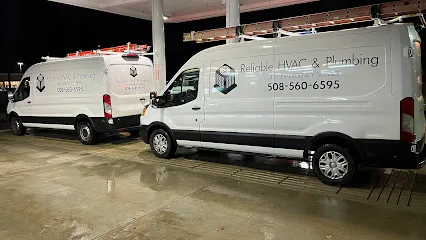
If your furnace won’t start or your AC suddenly stops cooling, the fastest way to avoid a frustrating repeat visit is choosing the right kind of service call. For homeowners in Worcester, MA, Reliable HVAC & Plumbing presents itself as a company focused on heating and air conditioning, with an “emergency number” for urgent situations and a contact page that encourages scheduling and requesting an estimate.
But the real decision isn’t just who you call—it’s what you ask for on the first phone call so the visit leads to a clear repair plan (not guesswork).
Start with the outcome you need: restore heat or restore cooling?
A good HVAC call should align to one primary success outcome. If the problem is immediate (no heat in winter, no cooling in peak summer), ask what their team will do to confirm the cause before ordering parts. If the issue is more “performance drift” (frequent cycling, weak airflow, uneven temperatures), the outcome may be a verified tune-up and safety check rather than a larger projects.
Reliable HVAC & Plumbing lists its service phone as +1 508-560-6595 and its Worcester address as 330 Tacoma St # 2A, Worcester, MA 01605. Using those details, you can confirm whether your request is treated as an urgent contact or a standard scheduled visit.
Reliable HVAC & Plumbing’s fit for furnace and AC calls: what to verify
Reliable HVAC & Plumbing’s contact page states that they provide “24/7 emergency services” and that they service Worcester County and the Greater Boston Area. If you’re calling because your system is down, ask the contact line a direct question: “Is this an emergency contact for my exact symptom, or will this be scheduled as a standard service call?” That answer affects both timing and the level of details you’ll receive on the first visit.
Also confirm how they handle estimates. Their site uses an “estimate” flow (“Click Here for an Estimate”) and highlights a process where you can schedule a service and share your address and message. Before work starts, push for a written scope that matches what you’re actually diagnosing—especially if you’re considering a repair that could later turn into a replacement.
Make “diagnosis first” a requirement, not a hope
In a clear HVAC service, diagnosis is the step that determines whether you should request:
- Repair (specific component fix after troubleshooting)
- Tune-up / maintenance (verification of operation, cleaning, and safety checks)
- Replacement planning (if the system can’t be reliably repaired or is near end-of-life)
So, when you call, ask what tests they’ll run and what “success” looks like afterward—warm air at the right temperature, stable combustion/safety parameters, or consistent cooling performance.
How to decide: repair, tune-up, or replacement—based on what you hear
Use the conversation to separate three things: the symptom, the cause, and the recommended scope. If they can’t explain the cause in plain terms, treat that as a red flag for both repair and replacement comparisons.
When a tune-up is the right request
A tune-up is often the better first step when your system runs but feels “off”: airflow seems weak, the thermostat cycles oddly, or you suspect maintenance has been skipped. For these situations, request a maintenance visit that includes performance verification—not just “cleaning and calling it done.”
When repair should be the focus
Ask for repair when you have a specific failure pattern: a furnace that won’t start, an AC that won’t cool, refrigerant-related symptoms, or repeated shutdowns. Repair calls should include a clear statement of what part(s) they believe caused the issue and what test confirms the system is performing safely and correctly.
When you should plan for replacement
If the technician identifies multiple issues, recommends repeated corrective actions, or can’t provide a credible path to reliable performance, ask for replacement guidance. A fair comparison should discuss how the repair would affect system reliability going forward and what signs would trigger another contact.
Service-call prep that makes estimates more accurate
Before you call Reliable HVAC & Plumbing at +1 508-560-6595, gather a few specifics so your visit stays focused:
- When the issue started and whether it’s getting worse
- Any error codes on the thermostat or equipment
- What changed recently (filters, power outage, thermostat settings, renovations)
- Photos of the thermostat and any visible system labels
Then, request that the estimate reflect the diagnostic steps they plan to perform. That way, you’re comparing like-for-like if you end up calling another HVAC contractor later.
Bottom line: the “right request” is what protects your time
Reliable HVAC & Plumbing advertises 24/7 emergency access and serves Worcester County and the Greater Boston Area, and its contact page is built around scheduling and an estimate process. Your best next step is to call with a clear outcome in mind—heat restored or cooling restored—and to ask for diagnosis before parts. That’s how you turn a stressful HVAC failure into a decision you can trust.