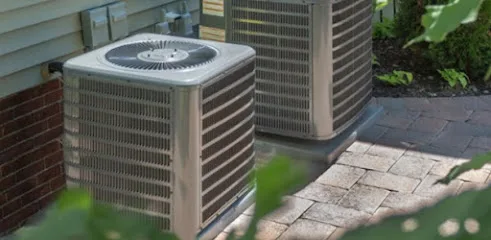
When your furnace won’t start or your AC stops cooling in Syracuse, the next decision often happens fast: you’re given an estimate. The problem is that not all estimates are equally “decision-ready.” A strong HVAC quote should show you the findings trail—what failed, what was checked, and what outcome the repair is trying to achieve—so you can approve work with confidence.
Comfort Systems Inc. serves Central New York and lists an address at 223 4th North St, Syracuse, NY 13208, a phone line at (315) 478-1736, and an official website at http://comfortsystemsair.com/. Public customer feedback shows a rating of 4.5 from 8 reviewers. Use those facts as context—but focus your approval on the estimate’s HVAC logic.
Start with the “failure story,” not the total price
Before you compare numbers, ask for the timeline of what changed. For example: did the furnace stop igniting after a thermostat change, after a recent power interruption, or after the system cycled a few times unusually? For an AC issue, was cooling absent the moment it was turned on, or did it start weak and worsen over days?
A decision-quality estimate will tie the diagnosis to the failure story. Look for specifics such as what technician observations pointed to the root cause—rather than simply stating that “repairs are needed.” If the quote doesn’t connect the diagnosis to the symptom, you’re estimating uncertainty, not a fix.
Check that the quote defines the repair target (success outcome)
HVAC work should have a measurable “success target.” If you’re approving furnace repair, the target is not “make it run again,” but “restore reliable ignition and stable heating output” based on what was found during testing. For an AC repair, the target should describe cooling restoration and airflow performance—again, based on the technician’s findings.
If Comfort Systems Inc. (or any contractor) discusses HVAC installation, maintenance, and repair as part of a broader service approach, your estimate should still remain specific to your home’s equipment. Ask the estimator to restate the outcome in plain language and confirm what will be different after the work is complete.
Make sure parts and labor are clearly separated
A transparent estimate separates what’s being replaced from the labor needed to diagnose, remove, install, and verify. You don’t need to memorize model numbers, but you should be able to understand the “why” behind the part list: what component failed, what condition it was reacting to, and why that replacement addresses the failure.
At minimum, the estimate should clearly indicate whether the recommendation is for a repair-now approach or whether the technician believes replacement will be more cost-effective for the long run. Without that distinction, you may end up paying for work that doesn’t match the risk level of the system.
Use the HVAC maintenance angle to reduce repeat callouts
One clue that an HVAC contractor thinks beyond short-term fixes is how they frame maintenance. Comfort Systems Inc. describes HVAC maintenance planning and mentions a “Gold Star Maintenance” program that includes tasks like chemical coil washing, annual replacement of filters, checking safety controls, and performing lubrication/greasing as needed. Even if you’re only planning a repair today, the estimate should explain how maintenance relates to the cause of your current problem.
Ask whether the failure appears connected to airflow restrictions, dirty coils, filter neglect, or control/thermostat behavior. If the estimate is silent on maintenance contributors, request a brief explanation of what you should do differently to avoid the same issue recurring within the next season.
Confirm schedule expectations and what to verify after the job
For homeowners, the day-of verification matters. Request confirmation of baseline readings or tests (for example, what was measured before work began and what changed after). Then ask what you should notice: burner behavior during heat calls, thermostat response timing, airflow consistency, or whether the system cycles within expected patterns.
Finally, align your approval with timing. Comfort Systems Inc. lists after-hours emergency service via a separate number (315) 546-4734. If your failure is urgent, make sure the quote covers the scope needed to restore basic operation and clearly states what might be deferred until follow-up.
The best HVAC estimates don’t just list line items—they explain the diagnostic reasoning, define the repair target, and show you how the fix fits your home’s heating or cooling reality. Use that structure to judge any Syracuse HVAC quote, including Comfort Systems Inc., and you’ll be far more likely to approve the work that actually solves the problem.