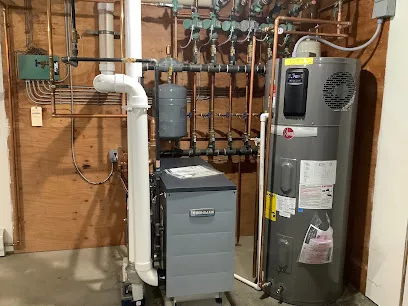
Choosing an HVAC contractor in the Burlington area becomes more manageable when the decision starts with the house rather than a broad service label. Vermont Energy Contracting presents a documented mix of heating, air conditioning, heat pumps, ductless mini-splits, boilers, furnaces, and indoor air quality work. That range may be useful for a home with several connected comfort concerns, but it also makes a focused first conversation important. A homeowner deciding between ductwork attention, a cooling repair, or a heat-pump project should identify the immediate problem and ask how the proposed work fits the existing system.
Air quality and ductwork deserve a system-level review
The company’s local category is Ductwork & Air Quality, while its official website separately describes indoor air quality, heating, and air conditioning services. Those facts suggest a sensible starting point for homes with uneven temperatures, dusty rooms, restricted airflow, or concerns about what the HVAC system distributes. They do not establish that every duct problem has the same remedy. A useful evaluation should distinguish between a damaged or poorly connected duct, an undersized return, a dirty filter, moisture, and an equipment issue that merely feels like an airflow problem.
Before approving work, ask what was observed, where the restriction or leakage is located, and whether the recommendation changes airflow, filtration, humidity, or equipment operation. A written scope should identify the areas involved and separate diagnostic findings from optional improvements. That distinction helps prevent an air-quality conversation from becoming a vague promise about comfort. It also gives the homeowner a clearer basis for comparing recommendations if another contractor is consulted.
Mitsubishi, Bosch, and hydronic options create useful comparisons
Vermont Energy’s official site identifies Mitsubishi Electric ductless mini-splits, hydronic heating, tankless ductless heating, and Bosch IDS 2.0 heat pumps among its featured products. It also lists service and replacement paths for ductless mini-splits, cold-climate ductless furnaces, boilers, air conditioners, and water heaters. For a property owner, this is a strength to investigate: the current equipment and the planned replacement can be discussed together instead of treating every symptom as an isolated repair.
The watchpoint is system matching. A mini-split may address a room or zone that central ductwork does not serve well, while a boiler belongs to a different heating arrangement than a forced-air furnace. A replacement discussion should cover the home’s insulation, electrical capacity, distribution method, controls, and backup heat where relevant. The contractor’s website references cold-climate heat pumps for Vermont winters, but a homeowner should still ask for the proposed capacity, operating assumptions, and how the system is expected to perform in the specific building.
Describe the equipment and symptom before calling
For a repair request, useful details include the equipment type, approximate age, thermostat setting, unusual sounds, error codes, filter condition, and the rooms affected. Someone reporting an AC that runs without cooling needs a different diagnostic path from someone describing a furnace that will not start or a heat pump that switches modes unexpectedly. Photos of the thermostat, outdoor unit, electrical panel label, and accessible ductwork may also help the office understand the request before scheduling.
Vermont Energy Contracting’s listed phone number is +1 802-658-6055, and its official website is http://vtenergy.com/. Those are practical contact points, but availability, diagnostic pricing, service boundaries, and appointment timing should be confirmed directly because they can change. The caller should also ask whether the requested repair, maintenance visit, installation, or air-quality assessment is handled by the same team and what information the company needs in advance.
Williston location and review volume provide useful context
The business record shows 188 Krupp Dr, Williston, VT 05495, United States, even though the profile is associated with Burlington-area service. That distinction matters when a homeowner is considering travel, property access, or the geographic scope of an appointment. Confirm the current business location and whether a particular address falls within the desired service area before relying on an online listing.
The available local record shows a 4.6 rating from 117 reviewers. That is a useful signal that many customers have left feedback, but a rating cannot determine whether a contractor is the right fit for a particular ductwork, furnace, AC, or heat-pump project. Reading recent comments for the same type of work is more informative than treating the average as a guarantee. Questions about labor, materials, scheduling, warranty terms, and exclusions remain necessary.
A defined scope makes the comparison more useful
Vermont Energy Contracting appears most relevant when a homeowner wants to compare several HVAC paths, including air quality, ductless heating, cooling, and heat-pump options. The strongest evaluation will stay specific: identify the symptom or project, document the existing equipment, request a written recommendation, and compare what is included with the home’s actual constraints. That process gives the rating, equipment range, Williston address, and official contact channels useful context without turning them into unsupported promises.