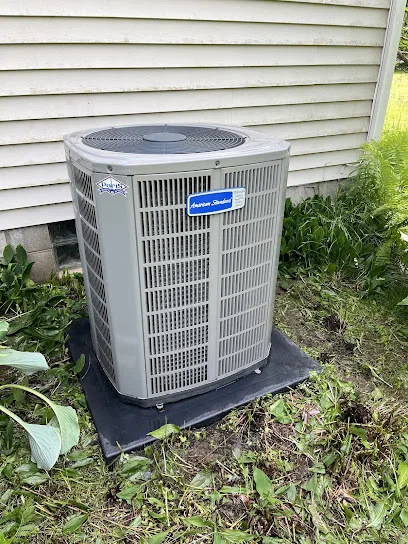
When heating or cooling breaks down, homeowners don’t usually need more HVAC jargon—they need a decision path. Paris Heating & Cooling Inc (1383 W. Ridge Road, Rochester, NY 14615) is a local provider that lists (585) 227-4512 and notes emergency heating and cooling availability 24/7. But even with a helpful contractor on the phone, you’ll get better outcomes when you can explain what you’re seeing and what you’ve already tried.
Start with what the system is doing (not just the symptom)
Airflow problems, inconsistent temperatures, odd cycling, and strange sounds can point to different root causes. Before you call, take 2–3 quick notes: which mode fails (heat or cool), whether it starts and then stops, and whether the thermostat shows an error message. Those details help a technician separate “simple service” from “repair that’s unlikely to last” or “replacement readiness.”
In the Rochester area, seasonal transitions can also reveal weaknesses: a furnace that barely heats on the first cold snaps, or an AC that cools briefly and then struggles, often indicates components that are already worn or airflow that’s been restricted.
Repair vs. tune-up: when maintenance is the smarter call
Choose an HVAC tune-up approach when the system still runs reliably but performance is drifting—think weak airflow, rising run times, dustier-than-usual vents, or a thermostat schedule that used to feel stable. A tune-up is also a good fit when you’re planning ahead (for example, preparing for peak cooling or the first sustained cold stretch) and you want the contractor to inspect belts/blowers, check combustion or heat exchanger conditions, verify refrigerant-related basics (as applicable), and confirm controls behavior.
Paris Heating & Cooling’s site highlights broad comfort and equipment categories such as installation, ductwork and air-quality solutions, and thermostat installation. That matters because many homeowners discover that what feels like a “system problem” is actually an air distribution or filtration issue that tune-up and system checks can uncover.
When repair is likely (and what “good repair” should include)
Repair can be the right move when the failure appears limited—one component, one control, or a specific restricted pathway—rather than multiple symptoms across heating and cooling. For instance:
• The furnace won’t ignite consistently, but the airflow and burners can be corrected without major system changes.
• The AC runs but doesn’t cool to target temperatures, and diagnostics point to a fixable refrigeration or airflow cause.
• The thermostat needs replacement or reconfiguration and the rest of the system behavior is otherwise normal.
Even then, ask for clarity: a reputable repair visit should explain what was found, which part(s) were replaced or adjusted, and how you can expect the system to behave afterward. If you leave without understanding the cause, it’s harder to judge whether another breakdown is likely.
Replacement conversations: the signs that it’s time to price a new system
Replacement often enters the conversation when repairs start stacking up, when the system struggles to meet temperature targets, or when safety-related issues are suspected. In practical terms, homeowners typically consider replacement when:
• The same problem returns quickly after a repair.
• The unit is oversized or undersized for the home, creating chronic cycling and uneven comfort.
• Diagnostics suggest end-of-life components rather than one isolated fix.
• The heating or cooling performance has degraded enough that it’s costing you comfort (and likely energy) every week.
Paris Heating & Cooling lists financing information and also promotes equipment installation categories (including air conditioning installations and furnace-related services). Use that to guide your next step, but still treat replacement as a scoped project: ask what changes (if any) will improve comfort and efficiency, how ductwork or air-quality factors will be addressed, and what thermostat strategy will be used for better control.
What to ask when you call Paris Heating & Cooling (so the quote is comparable)
Before booking service, prepare questions that force an apples-to-apples estimate:
• “Based on my symptoms, do you expect repair to be short-term or long-term?”
• “What tests will you run to confirm the diagnosis?”
• “If this becomes a replacement job, what parts of the scope should I expect—equipment only, or also airflow/ductwork and controls?”
• “Can you break the estimate into diagnosis, parts, labor, and any follow-up?”
Also verify availability. Their contact page states Emergency Services Available 24/7, and office hours are listed on the same page—so you can align your call with urgency.
Choosing between an HVAC tune-up, a repair, or a larger projects is less about guessing and more about matching symptoms to a realistic service pathway. If you can describe what the system is doing, ask the right diagnostic questions, and request a clear scope breakdown, you’ll make it much easier for any technician— including Paris Heating & Cooling—to recommend the next step with confidence.