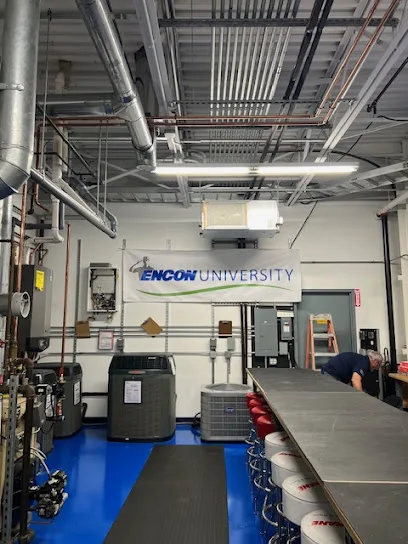
When homeowners in Stamford notice comfort slipping—warm rooms during AC season, weak airflow, or a furnace that won’t reliably start—the first call usually feels simple: “Get my system fixed.” But HVAC repair estimates can hide scope problems. Two quotes might both mention “compressor” or “thermostat,” yet differ dramatically in what they will diagnose, what they will repair, and what they will leave for later. This guide is built around ENCON Heating and Air Conditioning’s HVAC work in Stamford so you can compare service decisions like an operator, not like a guessing game.
Start with the symptom: cooling vs. electrical vs. airflow
Before you request an AC repair estimate, separate the symptom into an HVAC path. “The system runs but won’t cool” often points you toward refrigerant, compressor performance, or heat rejection issues. “The furnace won’t start” is commonly an ignition/safety or control signal issue. And “it cools for a while then stops” may be tied to airflow restriction, overheating protections, or cycling behavior. ENCON’s published HVAC scope includes diagnosing and repairing heating and air conditioning issues, including airflow problems and electrical failures, so your first job is to describe what you’re seeing (lights, sounds, and timing) in a way technicians can map to a repair plan.
Ask what the first diagnosis actually includes
Instead of asking, “How much to fix it?” ask: “What will you test first, and what outcome makes you move from diagnosis to parts?” A quality scope clarifies the steps that turn observations into findings—especially for issues that can be misread as “one big AC problem.” ENCON notes technicians are equipped to diagnose heating, ventilation, and air conditioning issues, and they service major brands and models; your appointment should still produce clear documentation of what they checked and what they found.
Match the estimate to the system: repairs, not “mystery parts”
It’s easy to pay for parts without reducing uncertainty. For example, a cooling complaint might be caused by low charge, a faulty component, a sensor/control mismatch, or airflow restriction. Your estimate should tell you whether the work is primarily:
1) A targeted repair based on a confirmed failure, or
2) A broader replacement decision because multiple components or performance issues are already evident.
ENCON’s positioning as a full-service HVAC provider emphasizes repairs and installation responsibility, which is useful—but you still need your job-specific scope in writing. Make sure the quote distinguishes labor for diagnosis from labor for repair, and that it states what is included versus excluded. This is how you prevent paying twice for the same problem.
Watch for “scope drift” in AC repair notes
Scope drift happens when an initial plan expands after the technician arrives. That’s not automatically bad—HVAC work often requires field verification. The problem is when the customer has no agreed boundaries. Before approval, ask whether additional labor or parts require a new authorization step and how the technician will communicate changes. If you’re comparing ENCON to another contractor, insist that both proposals describe the same definition of work: diagnosis tests, repair actions, expected downtime, and what “success” looks like afterward.
Use concrete local details when you book and verify
If you’re deciding whether to call ENCON Heating and Air Conditioning in Stamford, use practical evidence to confirm the right fit. Public listing details for ENCON include a 4.9-star average rating from 244 reviewers, and the business address is listed as 31 Parker Ave, Stamford, CT 06906. You can also reach the team at +1 203-375-5228, and their official site is https://www.goencon.com/. When scheduling, mention your exact HVAC equipment type (central air, heat pump, gas furnace, etc.) and the symptom timeline so they can route the correct diagnosis approach.
Prevent the same failure: document, warranty terms, and next steps
After the repair, your goal is repeatability. Ask for documentation that supports the conclusion—what failed, what was replaced or adjusted, and what measurements (like temperature changes or system behavior after service) confirm the fix. Also ask what warranty or coverage applies to parts and labor. If the system is older or the repair required multiple interventions, ask what the next likely failure scenario is so you can plan budgeting and timing.
For many Stamford homeowners, the best AC repair experience isn’t the fastest truck—it’s the clearest scope. If you can match symptoms to a logical diagnosis path, insist on written estimate boundaries, and require proof of what was found, you’ll make decisions that hold up even when the HVAC problem is more complicated than it first appears.