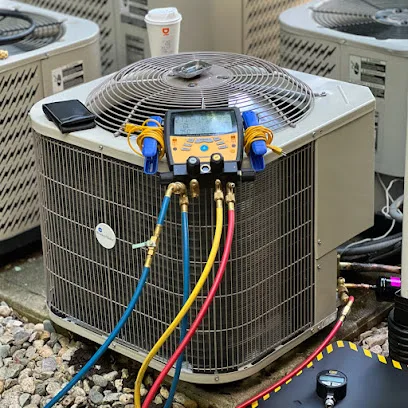
Home heating and cooling failures rarely feel “simple” in the moment. A heat pump that won’t switch modes, an AC that runs but won’t cool, or a thermostat that shows strange behavior can turn into repeat visits if the scope isn’t clear. If you’re considering Boston Comfort Systems (56 Russett Rd #2, West Roxbury, MA 02132, United States) with a public profile showing a 4.7 from 217 reviewers, treat the first appointment as a decision meeting: you’re not just hiring labor—you’re approving an explanation of what’s failing and how the repair will be verified.
Start with the “success target,” not the symptom
Ask the technician to translate your issue into a measurable outcome. For example, if you’re calling because the heat pump won’t heat, the success target might be: stable supply-air temperature at the registers after warm-up, correct mode switching, and normal operation under the system’s control logic. The key is that the estimate should reflect the diagnostic findings, not simply a guess at which part might be “the culprit.” If the discussion stays vague—no tests, no results, no explanation of what changes after the repair—pause before you approve.
Make sure the estimate separates diagnosis, labor, and parts
A good HVAC estimate is readable. Before work begins, Boston Comfort Systems should be able to break the quote into (1) what was found during diagnosis, (2) what steps will be taken to correct it, and (3) the parts expected to be replaced (if any), along with labor for each step. When parts and labor are bundled without a traceable link to the problem, it becomes harder to tell whether you’re buying a fix or just buying time.
Pay attention to the heat pump “scope boundary”
Heat pumps include both mechanical components and controls, so a scope boundary matters. If the issue is cooling performance, the technician should clarify what will be checked—airflow, thermostat settings and communication, and refrigerant-related performance indicators—before replacing major components. If the issue is short cycling or comfort problems, confirm how they plan to test for airflow restrictions and control behavior. Your goal is to avoid approving work that doesn’t directly address the root cause.
Confirm the verification plan before parts are ordered
One of the fastest ways to reduce repeat callouts is to agree on what “verified” looks like. Ask what measurements or observations will confirm the repair worked after the HVAC system is fully operating—such as thermostat response, mode switching behavior, and whether airflow is consistent. If the technician expects to order parts, ask how they’ll confirm the original diagnosis first. The online booking page linked to Boston Comfort Systems is available for scheduling, but the booking flow should not replace a clear on-site verification conversation.
Watch for “numbers first” pressure
Boston Comfort Systems’ public profile highlights heat pump service and customer rating signals, but your approval decision should still be based on evidence gathered during diagnosis. If you’re pressured to approve an estimate without seeing what tests were performed (or without being able to explain the repair target), consider it a warning sign. A heat pump repair should come with enough clarity that you understand why each line item exists.
Use neighborhood context to ask about timing and contact realities
Since the business is listed in West Roxbury, plan around winter and summer scheduling realities. Ask how soon service can be started when your AC isn’t cooling or your furnace mode isn’t holding comfort. Also ask whether they can provide a same-week approach if the thermostat or heat pump behavior worsens. You don’t need to know the internal contact system—just confirm what timeline they realistically commit to and what happens if the first attempt doesn’t fully resolve the comfort issue.
Before you approve, ask one question that forces clarity
Try this: “If I approve this estimate, what will be different after the repair—and how will we verify it?” A clear answer ties the diagnosis to the HVAC repair steps and to the tests that confirm the heat pump is operating correctly. If that question gets answered with specifics, you can move forward with confidence. If it doesn’t, you’ve learned something important—enough to keep your next appointment from being a rerun.
Buying HVAC repairs is really approving a technical story. With Boston Comfort Systems, use the visible rating signal (4.7 from 217 reviewers) as a starting point, then anchor your decision on whether the estimate defines the success target, separates diagnosis from labor and parts, and includes a verification plan for heating and cooling comfort.