When heating or cooling starts acting “off,” homeowners in Rochester usually want the quickest fix. But the better question is whether your furnace or air conditioner can be repaired reliably—or whether replacement is likely to be the smarter long-term move. Ambrose Mechanical Services (Rochester, NY) positions itself as an HVACR contractor serving Monroe County and surrounding areas, and their public materials emphasize HVAC repair, maintenance, and installation work for both heating and cooling equipment. They’re also reachable by phone at +1 585-663-7826, with an emergency line listed as available 24/7 on their site.
Start with what the system is doing (not just what it’s called)
Many HVAC decisions hinge on repeatable behavior. Instead of focusing on labels like “old unit” or “a noisy blower,” pay attention to patterns you can describe: Does the furnace run but never reaches temperature? Does the AC start, run briefly, and then short-cycle again and again? Is the thermostat holding steady, or does the temperature drift despite normal fan operation? These details help your contractor separate a contained repair from a reliability problem that keeps returning.
Repair is often the right fit when the failure looks contained
Repair-first usually makes the most sense when the issue appears localized and the rest of the equipment is behaving normally. In practical terms, that can mean you’re dealing with a component-level problem (for example, a part that doesn’t respond, a control that’s failing, or a burner issue) while airflow and temperature trends remain stable. If your heating cycle brings the house close to the target setpoint after the repair, and you don’t immediately see the same symptoms returning, that’s a strong signal you may have addressed the root cause.
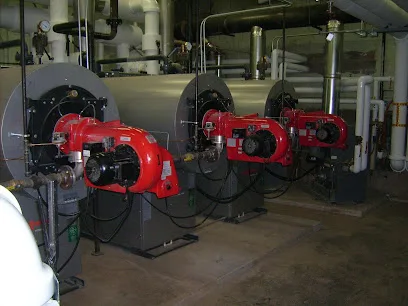
Ambrose Mechanical Services’ site highlights furnace and boiler repair and also describes their heating and air conditioning service approach for residential and commercial customers. When you schedule the visit, ask the technician to explain what specifically is failing, what it changes in the system, and what you should expect after the work is completed.
What a good repair estimate should include
A decision-grade estimate should do more than name a part. It should connect the diagnosed cause to the symptoms you’re seeing. Request a brief explanation of: (1) what was measured, (2) why the measurements point to a repair, and (3) what monitoring signs to watch over the next heating/cooling season.
Replacement deserves serious consideration when reliability keeps slipping
Replacement tends to enter the conversation when HVAC problems become recurring, unpredictable, or increasingly expensive relative to the equipment’s remaining service life. A common scenario is repeat visits for the same symptom—such as an AC that repeatedly fails to cool effectively, or a furnace that repeatedly struggles to maintain temperature. Another is when multiple system areas show wear at once (for example, performance drops alongside operating problems).
Because replacement decisions affect comfort and utility performance for years, it helps to treat the estimate as a comparison: how long the repair is expected to hold, versus what changes when you move to a new heating or cooling setup. Use the technician’s findings to evaluate whether the current equipment can realistically deliver stable heating/cooling without repeated interventions.
How to compare repair vs. replacement without guesswork
Ask for documentation that makes the comparison measurable—such as a clear breakdown of what’s being repaired, what components are at risk, and what conditions point to replacement. If the recommendation is replacement, ask what factors make it the “more reliable” path in your specific case (rather than a generic “it’s old” answer).
Service-call readiness: questions that help your contractor move faster
To keep the visit focused, write down the HVAC symptoms and timing: when the issue started, what changed (thermostat settings, filters, unusual noises, power outages), and any error codes you’ve seen. If you can, note the temperature performance during each cycle (for example, whether air feels warmer than before at the vents, or whether cooling fails after a specific runtime).
Then, when you talk to Ambrose Mechanical Services, use questions that map to the decision you’re making: “What evidence shows this is repairable and not likely to return?” “What should the system do after service that it isn’t doing now?” and “If replacement is recommended, what are the reliability factors behind that call?”
Make the estimate the decision—not a guess
Whether you choose repair or replacement, the goal is the same: stable, predictable heating and cooling. With an HVACR contractor like Ambrose Mechanical Services—publicly listed as offering furnace and boiler repair, AC service, and emergency availability—your best next step is to bring symptom patterns and request decision-grade explanations. Ask for a diagnosis that ties cause to observed behavior, and you’ll be able to choose the option that’s most likely to hold up through the next Rochester heating or cooling season.