Why air-conditioning service comes down to airflow
In busy commercial blocks like SoHo, temperature complaints often start with airflow problems, not a total system failure. A ceiling-mounted or compact commercial AC unit can run while still delivering uneven cooling—warm seating zones next to overcooled corners. That mismatch is frequently caused by restricted internal airflow from dust, buildup, or blocked passages inside the equipment.
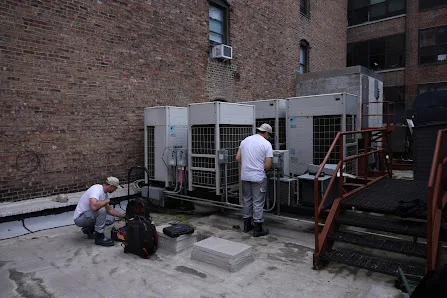
What to expect during a typical AC maintenance or repair call
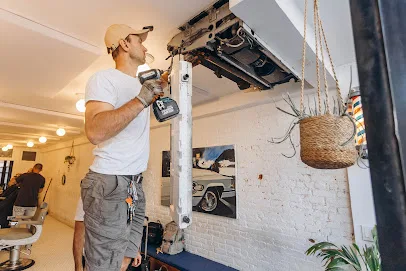
A well-run service visit usually follows a predictable workflow: confirm the complaint, check system status, inspect the components that control air distribution, then correct the cause of uneven performance. For ceiling-mounted setups, that can include inspecting internal channels and cleaning components that affect how air travels through the system.
For customers, the most helpful thing to prepare is context: where the room feels warm, when the issue appears, and whether airflow is weak only at certain spots. Service teams can use those details to narrow down the source quickly.
Common scenarios in SoHo and other Manhattan neighborhoods
Manhattan businesses often experience repeat comfort complaints because demand patterns and building layouts vary. A few of the more common scenarios that trigger service requests include:
- “It runs, but it won’t cool evenly”: The unit operates, yet certain seating or work areas remain warm.
- Weak air movement near vents: Air feels thin even when the thermostat is calling for cooling.
- Overcooled pockets: Some zones get too cold while others barely feel conditioned.
- Dust-related performance drift: Over time, airflow restrictions increase as debris collects inside components.
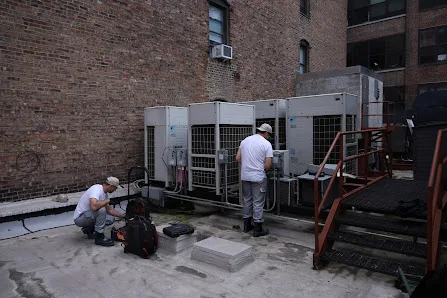
How technicians improve comfort after service
Once the underlying airflow restriction is corrected, the practical result is usually more than “colder air.” Customers typically notice:
- More consistent temperatures across the space.
- Balanced comfort between high-traffic and quieter zones.
- Improved cooling response after the thermostat cycles.
For a café, retail space, or other commercial location, that improvement matters because people judge comfort in minutes—not hours. Restored distribution can also reduce repeated call-outs that happen when the root cause is only partially addressed.
Quick visitor checklist: what to ask during the call
If you’re booking HVAC service in Manhattan, these questions help the visit stay efficient:
- “What is most likely causing the uneven cooling in our space?”
- “Is the issue related to airflow restriction, controls, or refrigerant performance?”
- “What maintenance steps should be done to prevent repeat comfort problems?”
- “Can you explain what you cleaned or adjusted and how it affects airflow balance?”
Where acrepair nyc operates
acrepair nyc serves customers in SoHo and surrounding Manhattan neighborhoods with commercial HVAC expertise. For visitors and business owners searching for reliable AC service in New York, the most practical approach is to share the comfort problem clearly—especially where the space feels warm, where it feels cold, and whether airflow feels weak at certain spots. That kind of detail helps a technician target the correct components during the visit.
Keeping comfort consistent between service visits
Even when equipment is running normally, airflow can degrade over time. A simple best practice is to stay attentive to early warning signs: drifting comfort levels, complaints that come and go, or noticeable differences between zones. If a problem returns, it’s usually a sign that airflow restrictions or maintenance needs were not fully resolved earlier.
For commercial spaces in Manhattan, consistent cooling depends on both cooling capacity and air distribution. When both are balanced, the experience for staff and customers improves immediately.